


It’s been on my mind to tell the story of the Omega Seamaster Polaris for a while now.
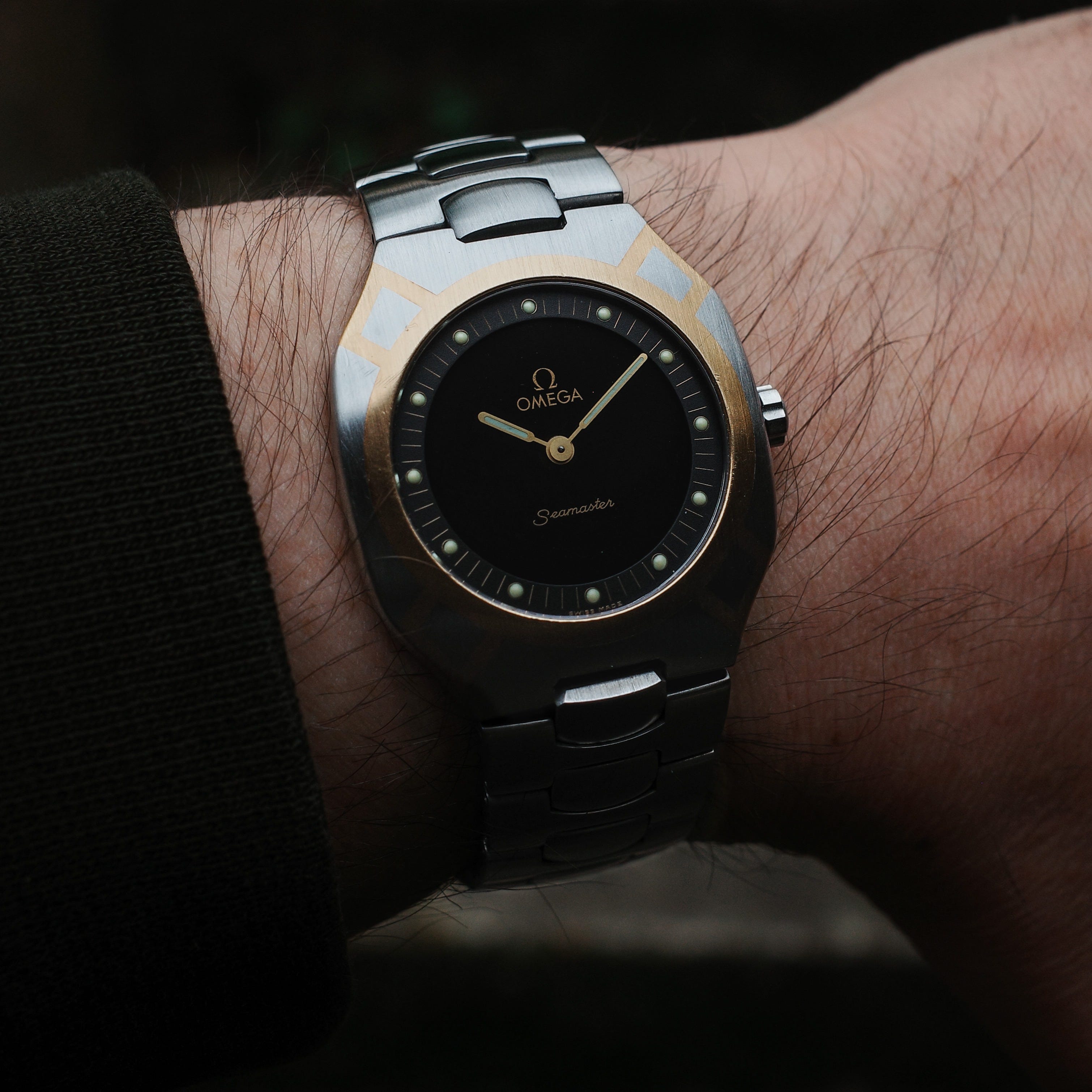
It’s a watch from a period of watchmaking I find deeply interesting – the 80s and 90s where the Swiss industry had to rebuild itself. A watch born not of the mechanical revivalism I have written about before; something different. Something quartz. Something weirder.
So I started to look through the archives to piece together this watch’s backstory – how it came to be, why it exists. And found that Omega never made a Seamaster named “Polaris”. What’s more, the oft-repeated claim that this was a Gérald Genta-designed watch was not defensible either.
The name was made up later
The oddball nature of the Omega Seamaster Polaris has led both authoritative sources and enthusiasts to sporadically shine a light on this quirky piece of design from the 80s. That was the impetus for this article too – I wanted to tell more of its story.
But as I dug through archives and records from the time of the watch’s production, I could not find any contemporaneous evidence anywhere that Omega officially marketed this line as the Seamaster “Polaris”.
Not in articles.
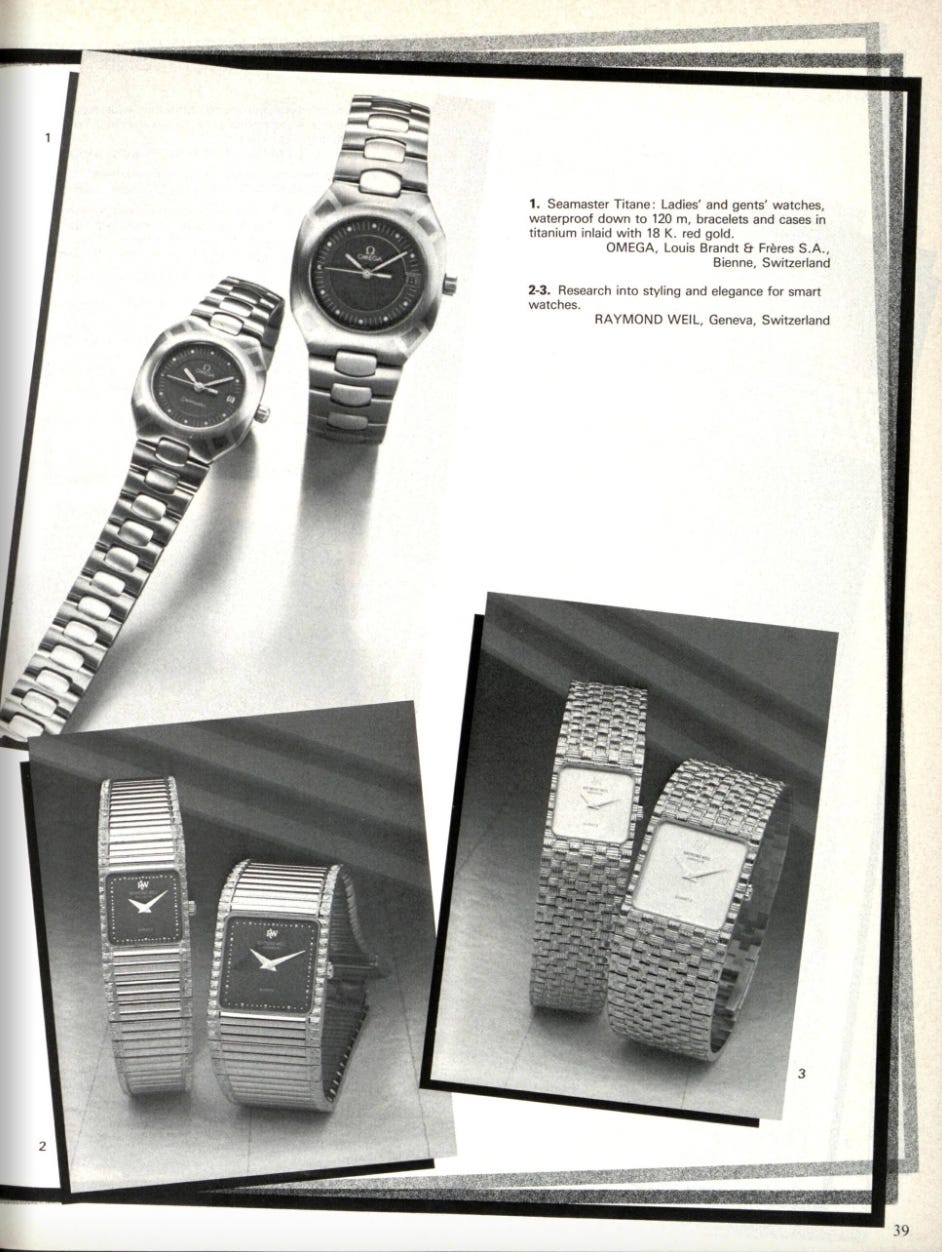
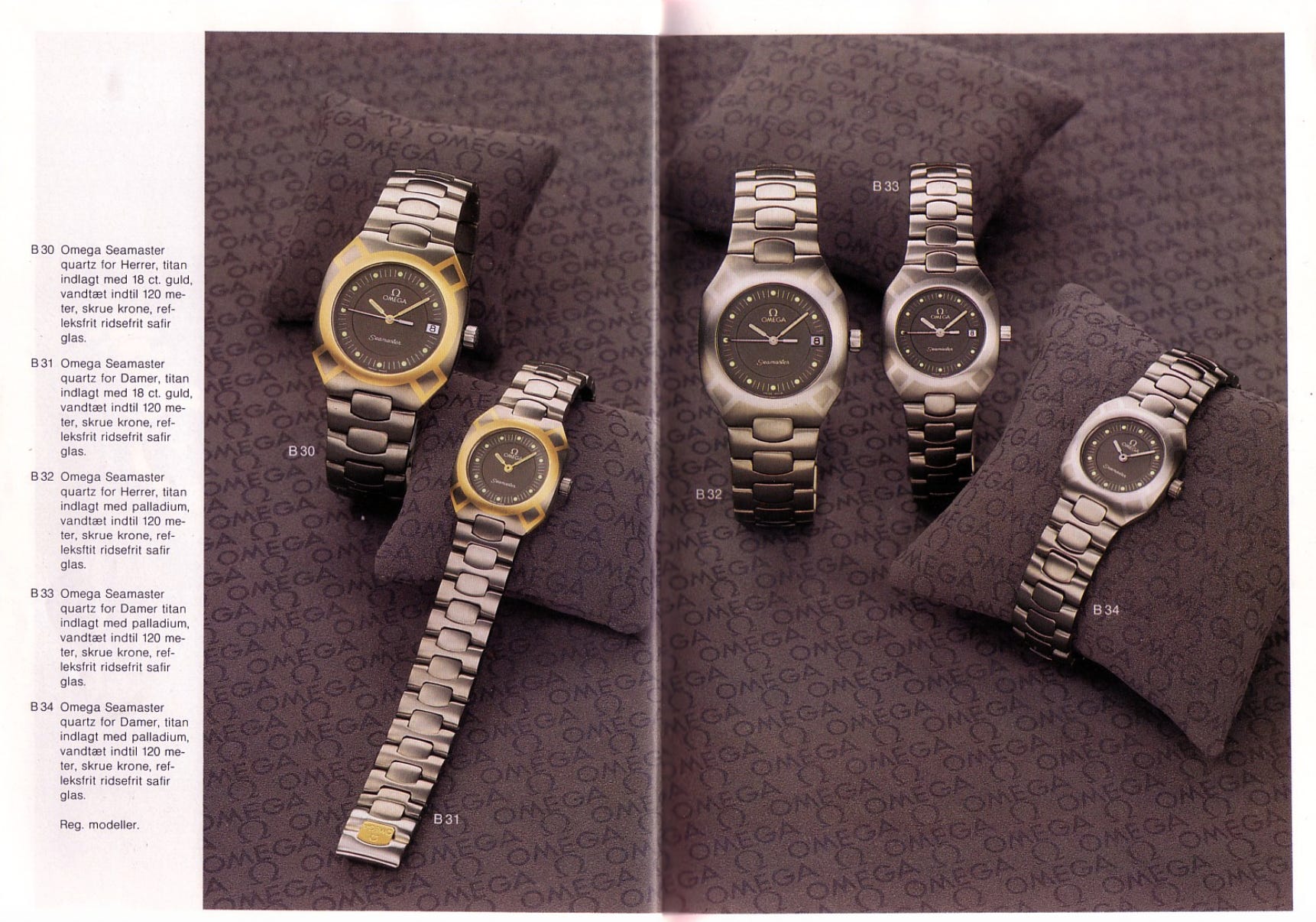
Not in catalogues.
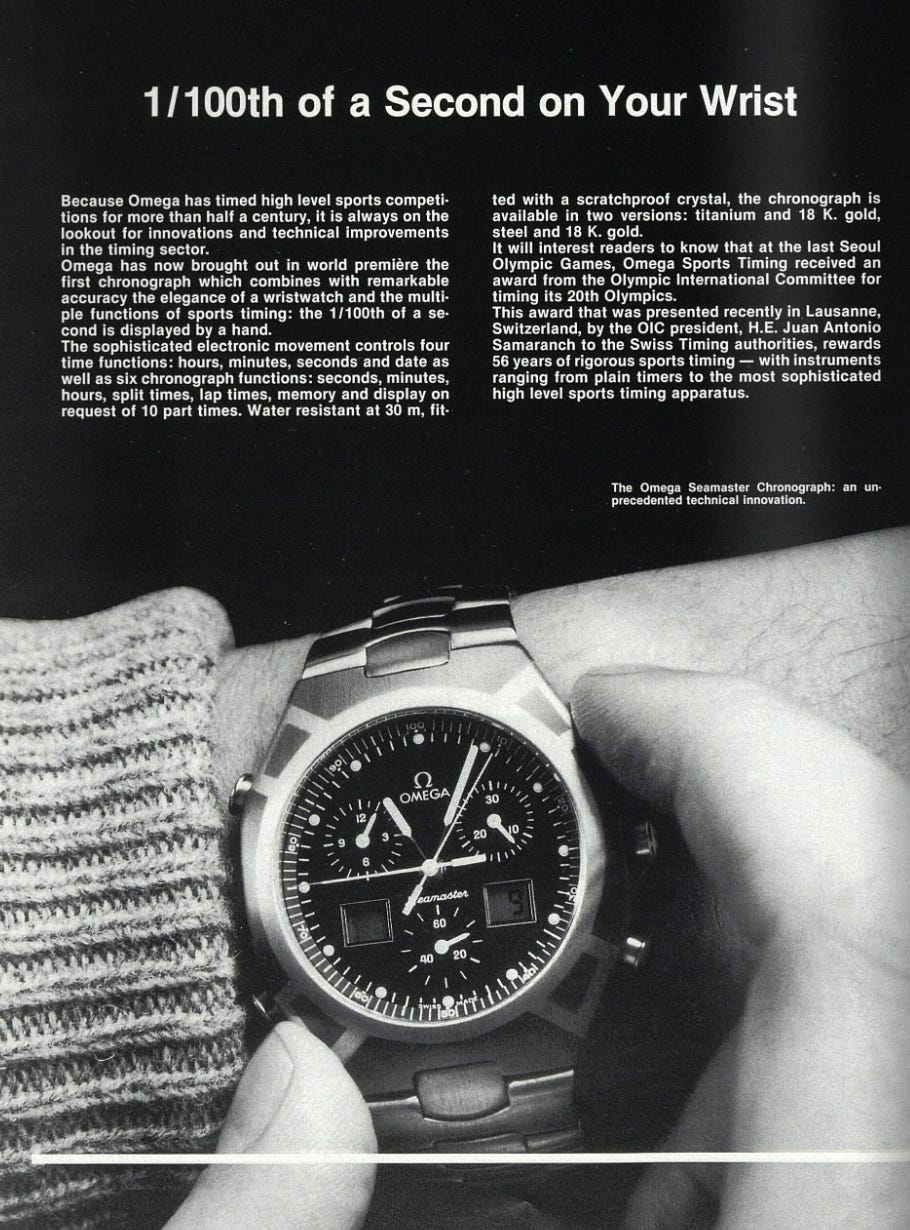
Not in adverts.
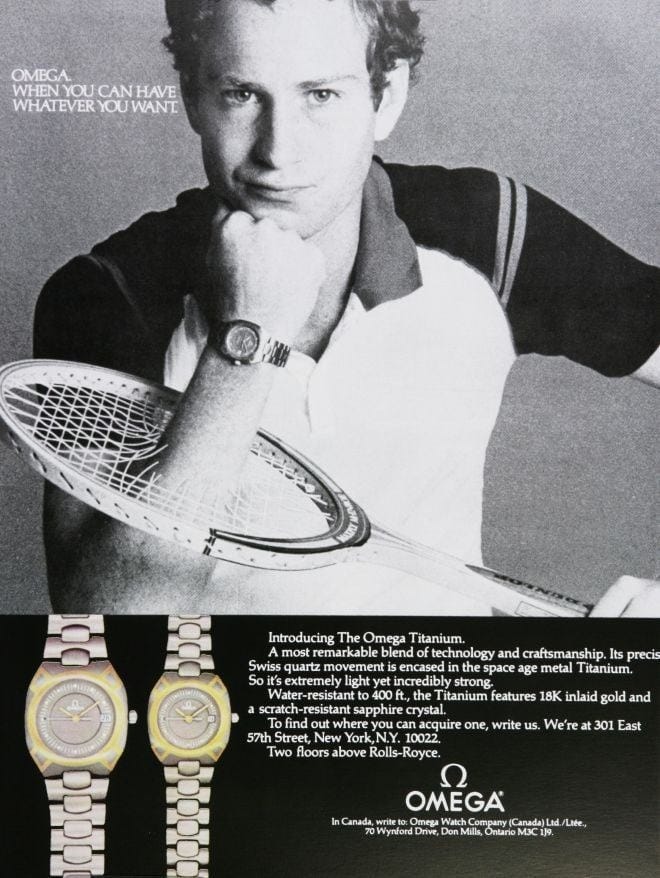
The titanium versions of this watch are referred to as the Seamaster “Titane” (which of course just means “titanium” in French). Steel versions are just Seamasters.
Curiosity piqued, I dug deeper.
Omega is a serial trade-marker, including for Seamaster sub-collections. Omega never sought IP protection for “Polaris”. Which is probably why Richemont was able to secure the rights to the name in 2014.
So what was going on? Where did this name come from, if not Omega?
An answer, of sorts, comes from the earliest auction listing I could find that mentions the name “Polaris” attached to this watch – a sale in 2001 by Antiquorum that lists the watch as: “Omega Titane, so-called “Polaris””.
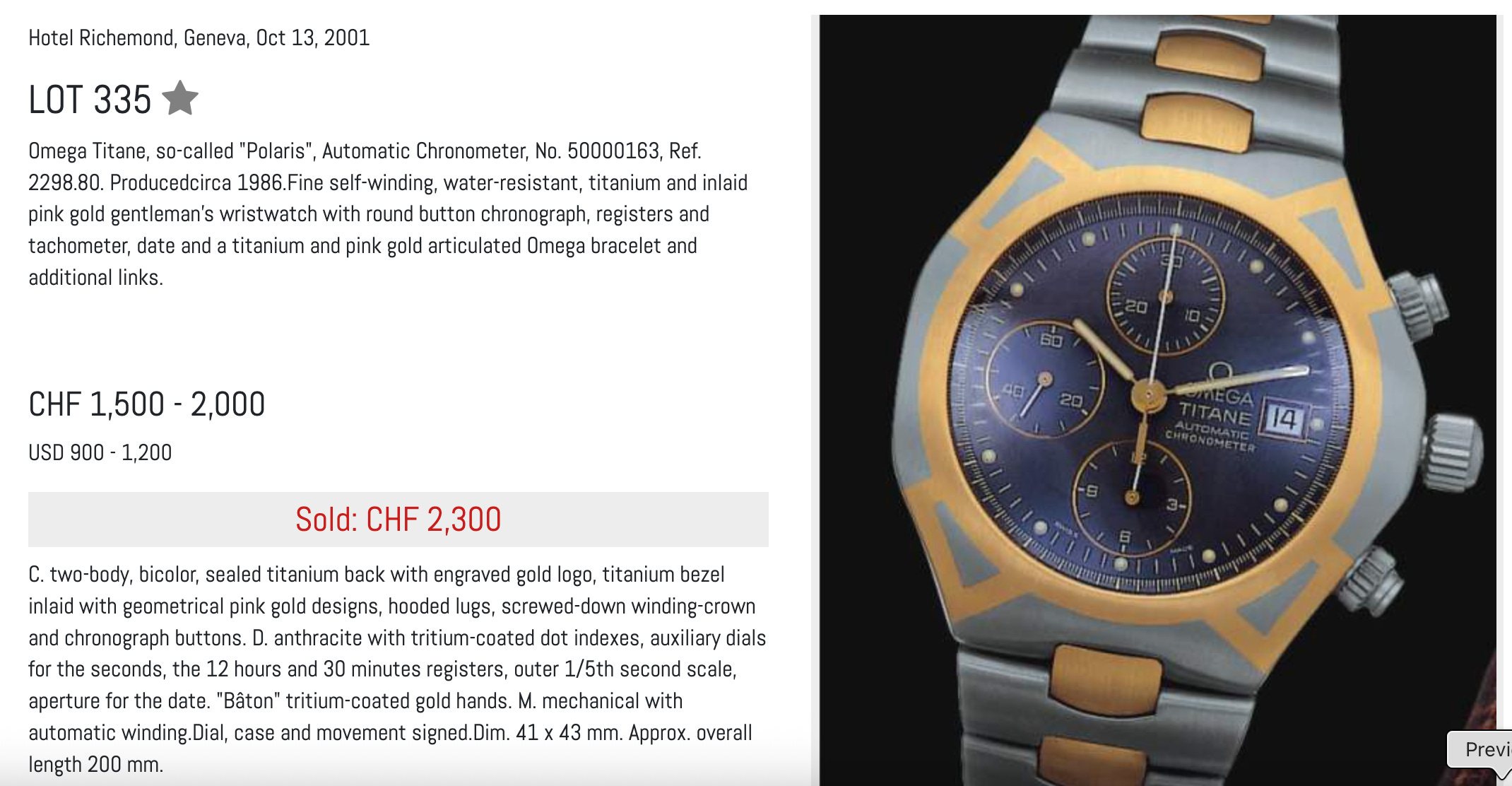
That is very deliberate wording – which earlier sales do not seem to use.
It seems likely then that Antiquorom’s watch specialist who wrote the listing at the time came to the same conclusion that I have: there is no documented record of Omega calling this watch the “Polaris”.
But it also tells us something else – people had started referring to this watch as the “Polaris”.
Which people? That’s hard to say with precision – I’m hopeful someone around at the time may shine a light in the comments – but conceivably it could have been coined by dealers and / or collectors in the 90s looking for shorthand to distinguish this distinctive design from the rest of the extensive Seamaster line. I’m certainly finding it hard to write around...
“Polaris” is also a highly specific, abstract word. Without primary evidence, it is hard to piece together how this name came to be given to this watch.
One line of thought is that people may have conjured up a cosmic conceptual link between it and Omega’s Constellation line, which is sometimes described as a Gérald Genta-designed watch. Which, of course, it is not. And neither is the “Polaris” as it turns out.
This isn’t a Genta watch
This is a quote from a 2024 Revolution article:
“In 1960, Pierre Mointat, Omega’s then Head of Creations, offered Genta exclusive contracts to work with different suppliers of Omega dials, cases, and bracelets. “For Seamaster Polaris, he designed the case, the dial, the bracelet, and the indexes separately, which Omega then assembled into one cohesive watch,” says Evelyne [Genta]. Genta also redefined the aesthetics of the Constellation with the introduction of the “C-Shape” case in ref. 168.009 – seamlessly integrating the case and lugs.”
An account corroborated by Gérald Genta himself in an interview he gave to Very Important Watches in 2009 (note he refers to the watch only as “the Seamaster”):
“I had the opportunity to sign contracts with brands such as Omega, Universal, Audemars Piguet, and many of Omega’s suppliers, because in reality it was not Omega that was my customer, it was Omega’s suppliers who paid me my fees. It was in this manner that I participated in the creation of the Seamaster, or of the Constellation, for example by designing the case for one, or designing a dial or a bracelet for another.”
There is no mention of it on the Iconic Models section of the Gérald Genta Heritage website. And even the Constellation gets a look in there.
The patent for the case design is attributed to Fernando Fontana, an Italian casemaker whose company eventually got swallowed up by the Swatch Group.
In the patent application Fontana says the drawings attached to the application show “my new design”.
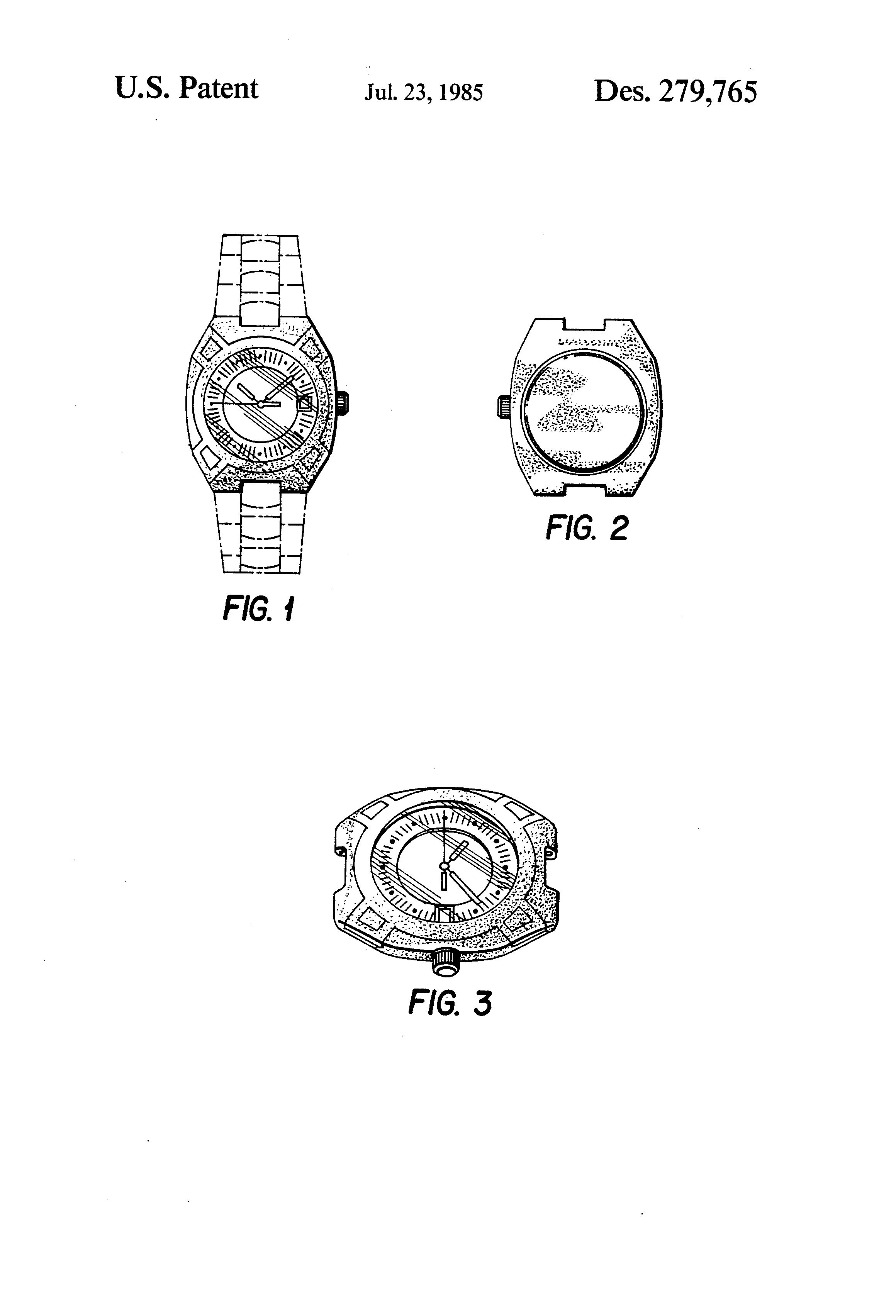
Compare that to the patent for the Credor Locomotive that is credited to Genta. Or the patent for the Omega Constellation Manhattan case that is correctly attributed to its actual designer, Carol Didisheim.
Though it may include some of his design language and thinking, available evidence does not support reading this watch as an authored Gérald Genta design in the way collectors use that term.
What the watch actually is
The watch that has come to be known as the Omega Seamaster Polaris was born into chaos. That we know for sure.
In the face of extreme headwinds from Japanese quartz manufacturing and a weaker US dollar, Omega had bet big on quartz.
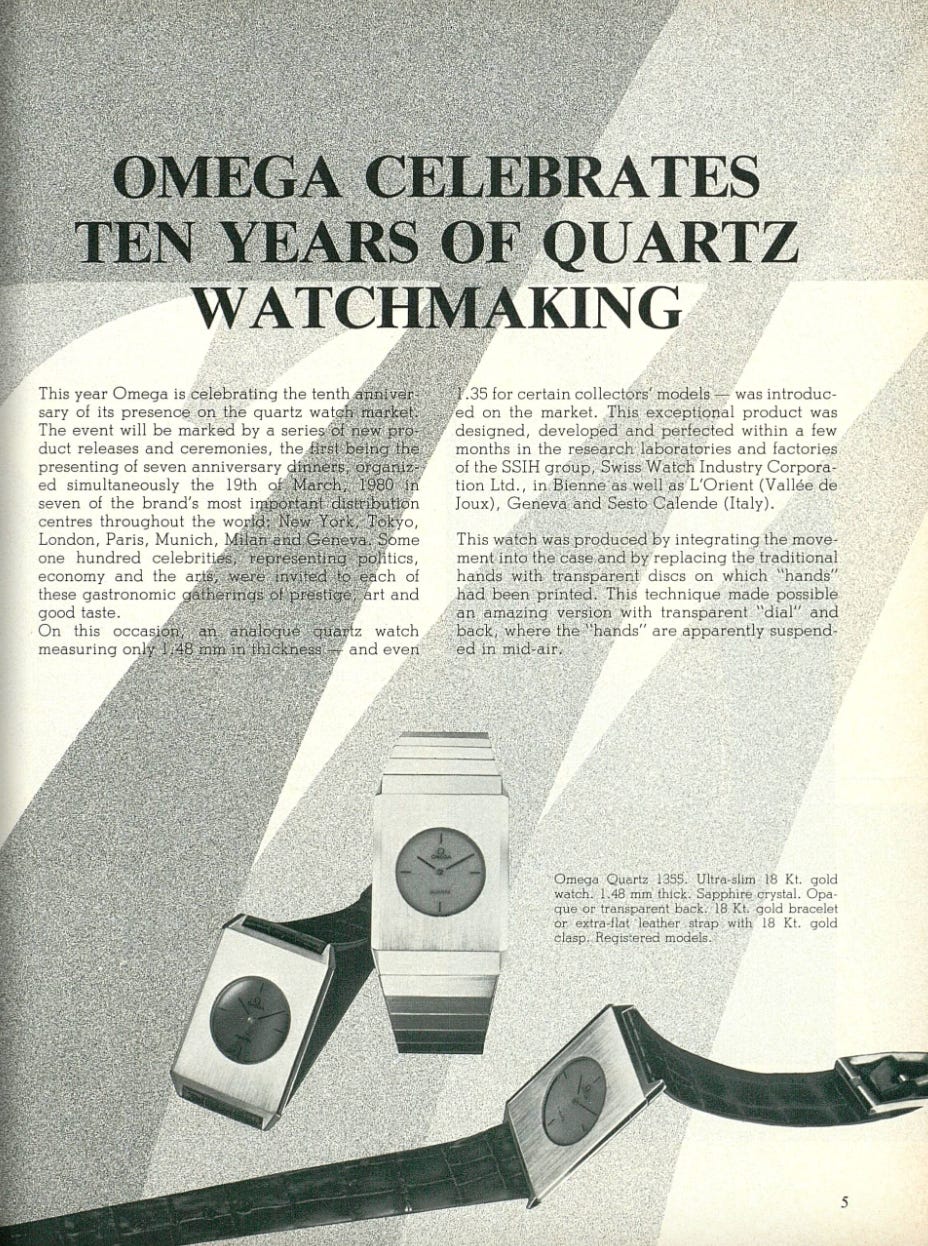
By the early 80s, its catalogues were dominated by quartz collections of varying designs. Mechanical watches took a back seat – including the iconic Speedmaster.
Société Suisse pour l’Industrie Horlogère (SSIH), the group that Omega belonged to at the time, was in trouble. According to Pierre-Yves Donzé, author of A Business History of the Swatch Group, SSIH annual sales volumes plummeted from 12.4 million to 1.9 million watches between 1974 and 1982.
In 1980, Swiss banks set up a restructuring committee to save the Swiss watch industry. Not out of the goodness of their hearts, you understand – but because the major watch companies were heavily indebted to the banks.
The committee enlisted consultant Nicolas G. Hayek to help reshape the industry – and get their money back. To cut a long story short, Hayek himself ended up buying majority stakes in SSIH and ASUAG (another large holding group), and merging them to form SMH (later Swatch Group).
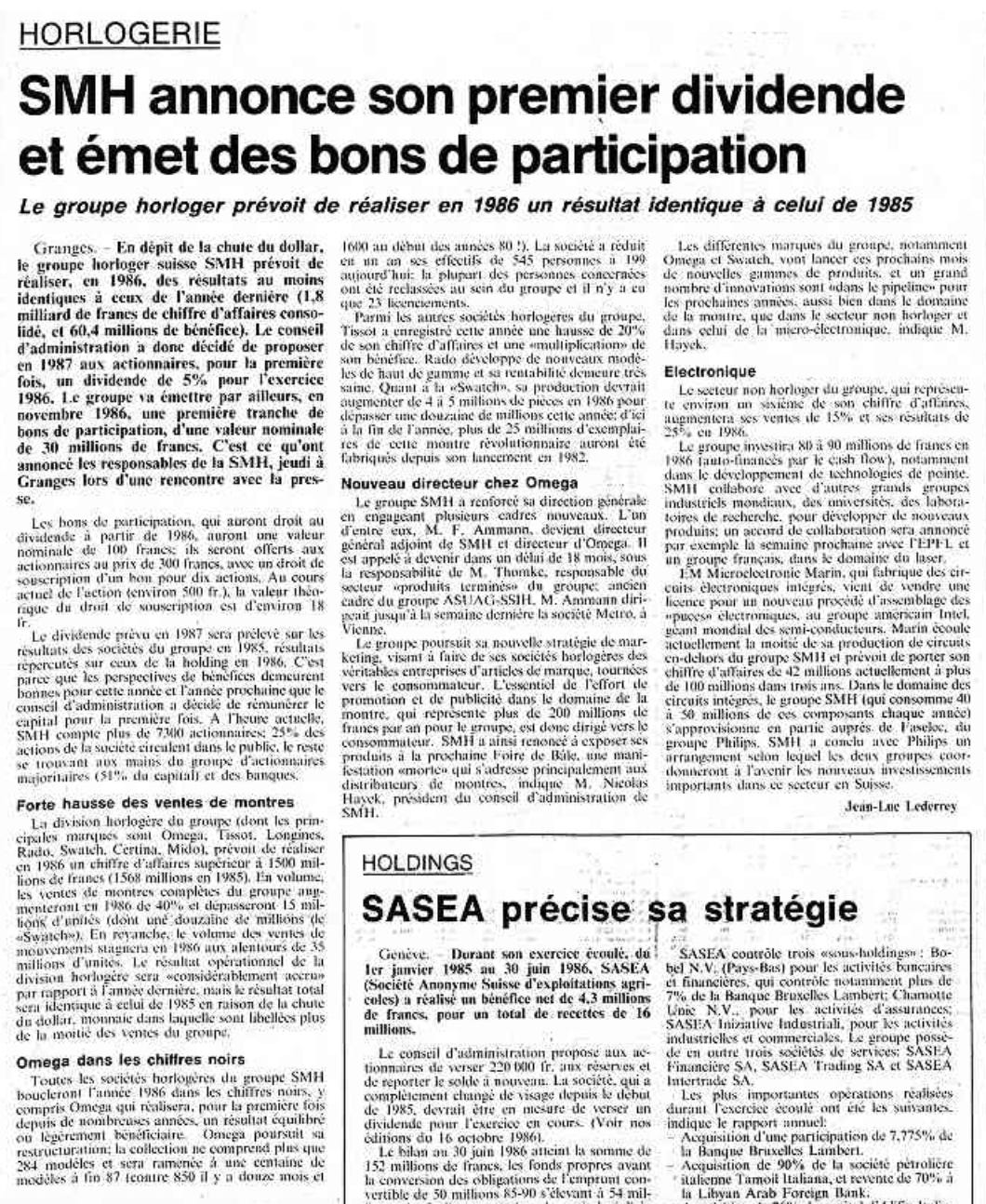
It seems one of the first orders of business when it came to Omega was line consolidation. This (machine-translated) quote from a 1986 Journal de Genève article speaks to the extent of the cull:
“Omega continues its restructuring: the collection will comprise no more than 284 models, and will be reduced to about a hundred models by the end of 1987, compared with 850 twelve months earlier and more than 1,000 at the beginning of the 1980s.”
While it’s hard not to draw parallels with the commentary around Omega today, my key point is this: the watch at the centre of this article was developed during a shaky period for the industry.
It was launched into turmoil in 1982 and then survived a culling of product lines during that decade, right up until the luxury repositioning of Omega in the 90s.
Why did it survive?
Titanium was not a common case material for wristwatches in the early 80s, with IWC often credited as the first to have used the material for a production wristwatch. Combining it with gold in the way Omega did was surely even less common at the time. Most notably, the titanium case is inlaid with gold strips in such a way that you can’t see the join. In the mid 80s, Omega released models that had palladium inlaid rather than gold.
Innovation did not stop with materials. Omega continued to produce the watch in different configurations and then in 1988 came movement innovation with the 1665, a quartz multifunction caliber with a digital display.
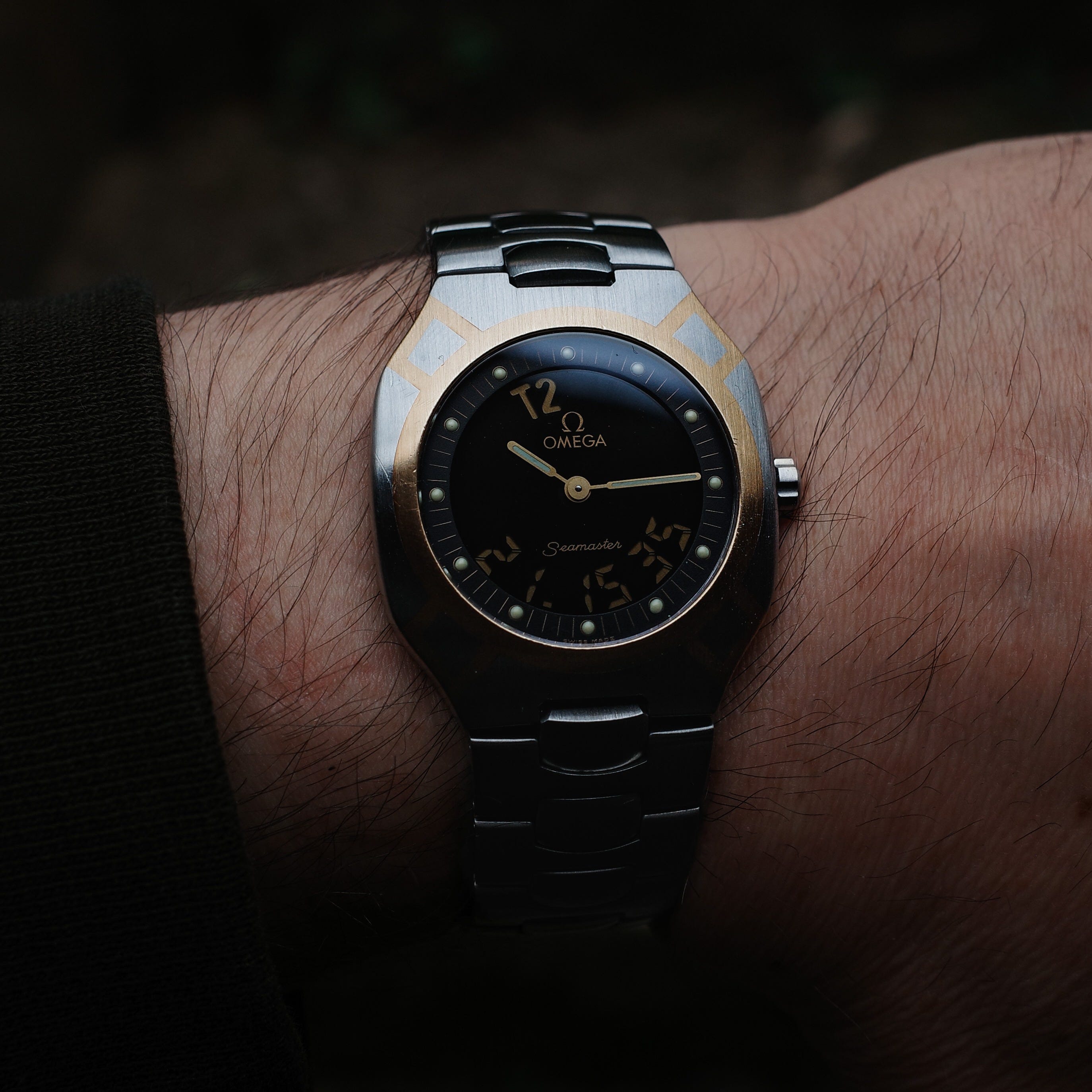
Reference DR 386.0822 is my favorite of the models that feature this movement – and of all the watches in this collection. Not only do the hands appear to stack on top of the digital readout, but you can hide the display (using the smart crown) to turn the watch into a space age, two-hand dress watch with a party trick that still impresses today.
It was this forward-looking approach that likely helped the line survive the SSIH-ASUAG merger and the subsequent cull. At least for a while.
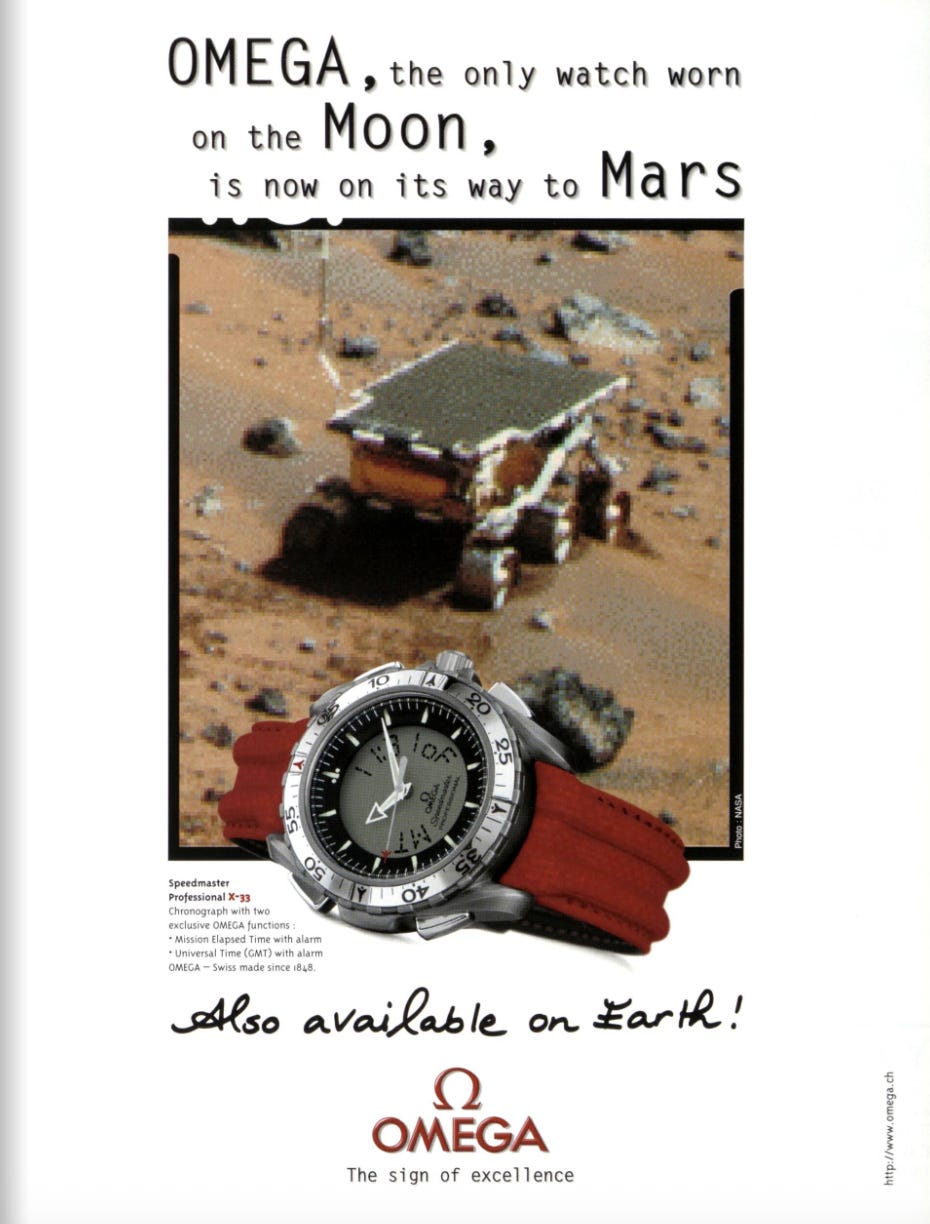
The mechanical watchmaking revival and luxury repositioning of the watch industry eventually reached Omega. The watch that came to be known as the Polaris fell out of production – though traces of its DNA continued to be present in the “pre-Bond” Seamaster bracelets of the early 90s and the Speedmaster X-33 that landed in 1998.
The tale it really tells
The watch that collectors now call the Omega Seamaster Polaris is interesting not because of the myths built around it, but because it exposes how watch mythology gets built in the first place – and how, with repetition without inquiry, those myths can start to be presented as fact.
Stripped of the Genta mythology, the watch itself remains interesting to me as a cultural artefact – its innovative approach to design, materials and functionality enabled it to survive a period of turmoil for the watch industry when many others fell by the wayside. It has assumed a name for which the origins are unclear.
This is the story this watch really tells – about innovation, survival, mystery and how myths can obscure what it is that makes a watch truly worth caring about.
With thanks and gratitude to
The comeback of the Swiss watch industry on the world market: a business history of the Swatch Group (1983-2010) by Pierre-Yves Donzé. [2011]
Field-Level Paradox and the Co-Evolution of an Entrepreneurial Vision by Ryan Raffaelli and Richard DeJordy. [2019]
The Le Temps archives.
God I wish omega still made watches that were half as interesting as these. I must say I have a real soft spoft for the Quartz Seamaster from the 80s.
Why ‘Polaris’ is an intriguing question then! The digital display that disappears is very cool and I love that it was the precursor to that functionality in the X-33.